top of page

"Before the Rain,” Betty Stanton

  • Writer: Amy Lee Lillard
    Amy Lee Lillard
  • 17 hours ago
  • 9 min read


Midwest Weird Presents: Maxine Firehammer reading her story, "The Highway"

Today on Midwest Weird: “Before the Rain" by Betty Stanton.


Buy Betty a coffee in support of her work! Be sure to leave a message and note who it's for : )


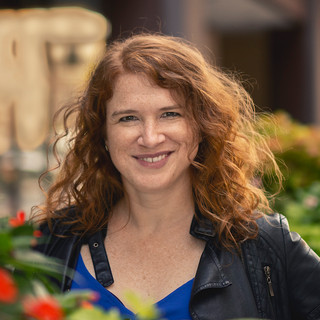
Betty Stanton (she/her) is a Pushcart nominated writer who lives and works in Tulsa, Oklahoma. Her work has appeared or is forthcoming in various journals and collections and has been included in various anthologies. She received her MFA from The University of Texas - El Paso and holds a doctorate in Educational Leadership. She is currently on the editorial board of Ivo Review. @fadingbetty.bsky.social


Midwest Weird is an audio literary magazine from Broads and Books Productions. We’re the home of weird fiction and nonfiction by Midwestern writers.


Episode Transcript:


This is Midwest Weird, an audio literary magazine from Broads and Books Productions.


We’re the home of weird fiction and nonfiction by Midwestern writers.


Today’s episode: "Before the Rain," by Betty Stanton. Read by the author.


Penance

They knew thirst before he came.


It had been forty days since the last rain, but the dust in this stretch of nowhere had memory longer than that. Water hadn’t pooled in the riverbed since spring. The well clanged dry when the buckets dropped. Chickens lay still in their pens, heads tilted as if listening for something. The horses no longer whinnied. They just watched the horizon, eyes rimmed white.


When he rode in, no one saw the horse. They only saw the way the light bent around him, how the air grew heavier like something exhaled from a dirty lung. Like breath held too long. The dust in his tracks rose behind him but didn’t settle. It spun in the light, dimming the sun.


At first, they thought he was just another drifter - cracked boots, coat too long for the heat, hat pulled low enough to shadow the fact that he had no eyes. Just a bone-white stare, dry as the riverbed.


He didn’t speak, not at first.


He stood by the well and listened.


It was the preacher who broke first. A man of long-winded sermons and red-knuckled morality. He came striding across the square like a man on fire with God’s own righteousness.


“You there,” he called. “You come to ask or to offer?”


The rider didn’t move.


The preacher’s voice faltered just slightly. “This town’s no place for beggars or ghosts. We’ve paid for our sins. There’s no judgment left to pass.”


Still nothing.


The preacher got closer, reaching for his cross like a weapon. “You got business, you speak it. Or you get gone.”


The rider finally turned. Just a fraction. Just enough.


The preacher dropped to his knees. His tongue withered in his mouth, a slug salted and dying. He tried to pray. Nothing came out but dust.


After that, no one else tried to talk. When the rider spoke, he didn’t ask for water or shelter. He asked for names.


They gave him one. Elias Carter. A man who’d fled town with another man’s wife. The rider nodded. Sat by the well. Waited.


The next morning, someone found Elias Carter’s name carved into the church’s side. A handprint next to it - not bloody, just dry, as if it had been pressed there by wind.


By noon, the milk had turned to chalk in the buckets. By dusk, even the cacti wilted.


They gave him another name. Thomas Hay. He’d been hanged years ago for a crime no one could quite remember the facts of, just that it had been bad enough to make the sheriff cry.


The wind kicked up around the well. Children stopped remembering their mothers’ names.


The mayor met with the elders. “We give him what he asks,” he said. “Give him living names. Then he’ll go.”


Mrs. Talbot, the blacksmith’s widow, spat at his feet. “You think he’s here for them or us?”


So they gave him another name. Daniel Finch. Buried outside the fence. Daniel had drunk himself to death during the last bad winter. The rider tilted his head, like he recognized the name.


That night, the town dogs lay down and did not get up again. The droplets left in the well turned to ash.


When the fourth name was given, the wind began to sing. Not music - just the sound of something trying to remember how to cry.


The rider was not hungry. Not thirsty. He didn’t even seem to be angry. He was waiting, and they knew it.


Somewhere between sin and silence, they had written the names he hunted themselves. On tongues. On prayers. On fenceposts and courthouse walls. Their guilt had weight, they decided, and he was the weight come to balance those scales.


On the sixth day, a child pointed to him and said “That’s what dying looks like.” Her mother slapped her silent.


By the seventh day, no one spoke at all.


He stood beside the well, still as a ruin.


Desire

Before the rider came, there was Elijah and there was Caleb.


They weren’t brothers, though people said they were. Said it to protect them. Said it to make sense of how the two boys could spend so much time together - hunting jackrabbits, mending fences, sleeping out past the reaches of town where stars came close enough to burn your skin.


Elijah had a laugh that could split a storm cloud. Caleb had a scar beneath his left eye from a horse that had once thrown him clean off. They were made for each other in the way lightning was made for dry plains - inevitable, dangerous, divine.


In the dry season two years before the rider came, they vanished together for four days. Took the last of the good whiskey and a stolen mule and set out toward the old silver canyon. When they came back, Elijah’s shirt was torn and Caleb had a wound across his neck that didn’t come from any rockfall.


They didn’t say where they’d been, but Elijah stopped coming to church and Caleb wouldn’t meet his eyes.


After a month, Caleb married Mercy Fallow.


After two months, Elijah left town with only a saddlebag and a dented tin cup. The saloon girl said she heard him crying into his own shirt the night before he left, muttering something about mouths that never stayed closed and hands that never stopped shaking.


On the eighth day, Caleb was the first to offer a name.


He said it too fast. Like it had been waiting. Like it had been sharpened.


Elijah Quinn.


The rider did not move. Just let the name hang in the dust like a low branch over water.


It wasn’t until the next morning that Caleb found the message carved in the tin of his water basin.


That was not yours to give.


Mercy left the next day and took their son.


Caleb stayed. He had to. That night, the town forgot how to sing.


Caleb stood on the edge of town with dust filling his mouth and looked toward the canyon. Once, he’d wanted to die for what he felt. Then he’d wanted to live. Now, he just wanted to be remembered right - not for who he married, or what name he gave, but for the time he held Elijah under the stars and thought maybe the world had been made for them.


The rider never asked Caleb for his own name, but Caleb gave it anyway. When he did, the wind stopped. The dust fell still and the well whispered a name no one spoke aloud anymore. A name shaped like a prayer and buried like a bone.


The rider didn’t judge him. He only turned and faced the horizon.


That was worse.


Inheritance

The boy had a cough before the drought started. Just a dry little thing in the night. Nothing to worry about, his father said. Just dust in the throat.


The dust stayed to become a sea. It got into the corn first. Then the pigs. Then the walls of the house. His mother tried to keep it out with damp cloth pressed to the sills, but the cloth went dry too fast. She stopped humming when she swept. The broom raised more dust than it caught.


His father had a way of standing with his fists closed - even when he wasn’t angry. The boy learned to listen for the sound of his boots before he came through the door. Learned to tell whether supper would be smiles, or silence, or fury.


Some nights, the boy dreamed of rain thick like honey. In his dreams, he drank until his belly swelled, but when he woke, the cough was still there. He coughed until his throat bled. He coughed until his father hit the wall and told him to shut his goddamn mouth before he made it worse.


Thirst runs in bloodlines. His mother whispered that once. She said it like the memory of a curse, quiet and forbidden.


The rider had a name once. Of course he did. No one speaks it now. Maybe the desert took it, or the rider buried it himself.


He was young once. He was someone’s son. Someone’s failure. Someone’s secret.


Maybe it was the thirst that hollowed him out, or maybe it was the name he carried - his father’s name - said too many times with fists or belt buckles, until he no longer wanted it.


Maybe the thirst took pity on him.


The rider doesn’t remember the sound of his own voice, but he remembers the smell of whiskey sweat and the way his mother whispered prayers into the fire. He remembers the word sorry shouted through a door that wouldn’t open. He remembers being told to fetch water from a well that had already run dry.


That’s what inheritance is, in places like this. You’re sent out with a name in your mouth and no map. You’re told to find water. You’re told not to come back empty.


And if you do? Well. Some boys die.


Others learn to listen.


Somewhere in the dust of his coat, the rider still carries that name. Pressed flat like a flower in a book. Forgotten, but not gone.


When he came to this town, he heard it again - not the name itself, but the shape of it.


The cruelty passed down from father to son. The way some men’s mouths are too dry to say I was wrong.


He watched a father slap his boy in the street coughing.


The rider sat by the well and remembered the hand that taught him how to draw blood before he learned to write, and he waited.


On the ninth night the boy crept from his home and brought him a folded note. My father’s name is Levi Cray. Please don’t take mine.


The rider read it, then folded it again and tucked it into the dust of his coat. When morning came, Levi’s name was on the wall of the church.


Dust knows what you give up to break the cycle.


Thirst runs in bloodlines.


Judgment

The boy who had swallowed his own tongue died on the tenth day.


He hadn’t spoken since the preacher died in the street, hadn’t eaten since the dogs didn’t get up again. His mother rocked him in her arms like he was still warm, like she could wring life back into him by crying out his name to the wind enough times.


They buried him in dust because the ground was too hard for digging. By then, the townsfolk had stopped whispering. They stood out in the street, watching the rider beside the well, their lips cracked and bleeding. A whole town of people trying not to speak, not to breathe too hard, not to draw attention. Not to give him another name.


But he wasn’t watching them anymore. He was listening.


You can hear guilt in silence, if you listen long enough. It echoes like an empty cup. The rider tilted his head slightly, as if straining to catch a sound just out of reach. A name trying to say itself.


The mayor was the first to break.


“My name,” he said, voice rasping like rope. “Is Jamison Murphy. Take my name. Let the others be.”


The rider didn’t move.


Then came Mrs. Talbot, her hair missing in chunks from where she had torn it out. “I stole water,” she said. “From the chapel. I said it was for the baby. It wasn’t. I drank it before the baby died.”


The saloon girl followed, then the schoolteacher. Names rose into the air like smoke. Some confessed sins. Some only gave names. The rider never asked for the difference.

And when the sun dipped low enough to set the dust on fire, one final figure stepped forward.


The sheriff.


He used to be the strongest man anyone here had ever seen – jaw like split granite and a body built by years of the hard desert sun. He wore his badge like a scar. He was a man who was used to silence, accustomed to watching things die slowly.


Today, he was shaking.


“I gave him up,” he said.


No one asked who.


“I gave him up to save myself. Thought maybe the desert would take him instead of me.”


He looked at the rider then, really looked, and for a moment there was a flicker - a momentary narrowing of distance. Like recognition. Like memory.


“I see you now,” the sheriff whispered.


The rider stepped forward. One step. That was all. The sheriff dropped to his knees. Dust filled his eyes. Closed his throat. Then it was gone. When he looked up, the rider was gone.


Then the sky cracked and opened in rain.


They did not cheer when the water came.


It fell slow, at first, like it had forgotten how. Just a hush against rooftops, a soft tapping on the tin over the church. Then louder. Heavier. Sheets of it, thick as blood and cold as truth.


They let it wash them where they stood, eyes closed, mouths shut.


A kind of prayer.


By morning, no one remembered the rider’s face, only the shape of his absence. The boy’s mother planted rosemary beside the well. A new preacher came. The sheriff never spoke again.


We’ll be back next week with more weird stories.


If you like what you hear, give us a rating or review in your podcast player!


And if you want your fiction or nonfiction to appear on Midwest Weird, send us your work! Read the show notes for a submission link.


Thanks for joining us. And stay weird.


Let's get weird. Get all the latest.

© 2025 by Broads and Books Productions. Powered and secured by Wix

bottom of page